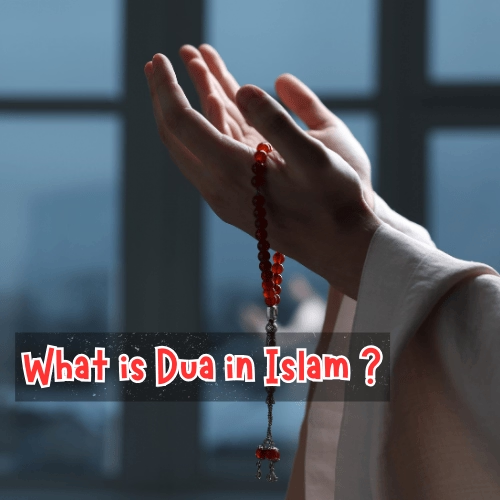
What Is Dua in Islam?
In Islam, “Dua” (Arabic: دعاء) means supplication, prayer, or calling upon Allah. It is one of the most powerful and personal acts of worship in Islam. Through dua, a person directly communicates with Allah — asking for help, forgiveness, guidance, protection, or blessings.
Unlike formal prayer (Salah), dua can be made at any time, in any language, and in any situation. It is the pure expression of a believer’s dependence on Allah.
Dua is not just asking for things — it is an act of faith, humility, and trust.
1. The Meaning and Importance of Dua
The word “dua” literally means “to call” or “to invoke.” In Islamic belief, when a person makes dua, they are calling upon their Creator alone.
Islam teaches that:
- Allah hears every dua.
- No dua is ever wasted.
- Allah responds in the best way.
Dua shows that a human being recognizes their weakness and Allah’s power. It builds a direct spiritual connection between the servant and the Creator.
The Prophet Muhammad (peace be upon him) described dua as the essence of worship, because it reflects sincerity and reliance on Allah.
2. Dua in the Quran
The Quran contains many examples of prophets making dua during difficult times.
For example:
- When Prophet Yunus (Jonah) was inside the whale, he called upon Allah.
- Prophet Ibrahim (Abraham) prayed for righteous offspring.
- Prophet Musa (Moses) asked Allah for strength and ease in his mission.
These examples teach that:
- Even prophets made dua.
- No one is too strong or too weak to ask Allah.
- Turning to Allah in hardship is a sign of faith.
The Quran also promises that Allah responds when a servant sincerely calls upon Him.
3. Types of Dua
Dua can be divided into different categories:
a) Dua for Worldly Needs
These include asking for:
- Health
- Marriage
- Financial stability
- Protection
- Success
Islam allows believers to ask Allah for both small and big matters.
b) Dua for the Hereafter
Muslims also ask for:
- Forgiveness
- Mercy
- Protection from punishment
- Entry into Paradise
This type of dua reminds believers that life is temporary and the Hereafter is eternal.
c) Dua of Praise and Gratitude
Not all dua is about asking. Sometimes, it is simply praising Allah or thanking Him for blessings. Gratitude itself is a powerful form of dua.
4. The Conditions of Acceptance
Islam teaches that certain factors increase the chances of dua being accepted:
- Sincerity — Asking only from Allah.
- Halal income — Living honestly and avoiding wrongdoing.
- Patience — Not becoming frustrated if results are delayed.
- Strong belief — Trusting that Allah will respond.
Dua should never be made with doubt. A believer asks with hope and certainty.
5. Best Times to Make Dua
Although dua can be made anytime, some moments are especially recommended:
- During the last third of the night
- While fasting
- Between the call to prayer (Adhan) and the start of prayer
- On Fridays
- While in prostration (Sujood)
These times are considered spiritually powerful.
6. How to Make Dua Properly
There is no fixed language required for dua. A person can speak from the heart.
However, Islamic tradition teaches a beautiful method:
- Begin with praising Allah.
- Send blessings upon the Prophet.
- Ask for your needs sincerely.
- End again with blessings upon the Prophet.
- Maintain patience and trust.
Dua should be made with humility. It is recommended to raise hands and face the Qiblah if possible, but it is not compulsory.
7. Does Allah Always Answer Dua?
This is one of the most important questions.
Islam teaches that every dua is answered in one of three ways:
- Allah grants exactly what was asked.
- Allah delays it for a better time.
- Allah replaces it with something better or removes a harm.
Therefore, even if a person does not see the exact result, it does not mean the dua was rejected.
Allah knows what is best for His servant.
8. Common Mistakes About Dua
Some misunderstandings include:
- Thinking dua works like magic.
- Losing hope quickly.
- Only remembering Allah during hardship.
- Believing specific words have power without faith.
Dua is not a formula. It is a relationship with Allah.
Consistency matters more than dramatic emotion.
9. The Spiritual Benefits of Dua
Dua brings many inner benefits:
- Peace of heart
- Emotional relief
- Hope during difficulty
- Stronger faith
- Patience and trust
Even before the result comes, the act of making dua itself brings comfort.
It reminds a person that they are never alone.
10. The Difference Between Dua and Wazifa
While both involve remembrance of Allah:
- Dua is a direct personal request made to Allah.
- Wazifa is a repeated spiritual practice, often structured.
Dua is flexible and can be spontaneous. Wazifa is usually regular and scheduled.
Both are valid acts of worship when done correctly.
11. Conclusion
Dua in Islam is a powerful act of worship and a direct conversation with Allah. It reflects humility, faith, and trust. Through dua, believers seek help in both worldly and spiritual matters.
Islam teaches that Allah is always near, always listening, and always responding in the best way. Whether the answer comes immediately, later, or in a different form, no sincere dua is ever wasted.
In simple words, dua is the believer’s strongest weapon and greatest comfort. It turns fear into hope, weakness into strength, and hardship into spiritual growth.
True success lies not just in getting what we ask for — but in staying connected to Allah through sincere dua.
